In Henderson, Nevada, the integrity of any structure begins with a thorough understanding of its foundations. This category encompasses the critical geotechnical engineering services required to design, analyze, and verify foundation systems that safely transfer building loads to the underlying ground. From single-family homes in Green Valley to large commercial developments near the Las Vegas Strip corridor, foundation performance directly impacts structural safety, long-term serviceability, and compliance with local building codes. A properly engineered foundation mitigates risks associated with differential settlement, expansive soils, and seismic activity, ensuring that investments are protected against costly repairs and potential failure.
Henderson’s geology presents unique challenges that demand specialized foundation expertise. The city sits on a complex alluvial fan system deposited from the McCullough Range, characterized by layers of sands, silts, gravels, and cemented caliche. These deposits can vary dramatically over short distances, creating conditions where bearing capacity and settlement potential change within a single building footprint. Additionally, the arid climate and deep groundwater table contribute to hydro-collapsible soils in some areas, which can undergo sudden volume reduction when wetted. These local conditions make a standardized foundation approach risky and underscore the importance of site-specific geotechnical investigation and analysis.
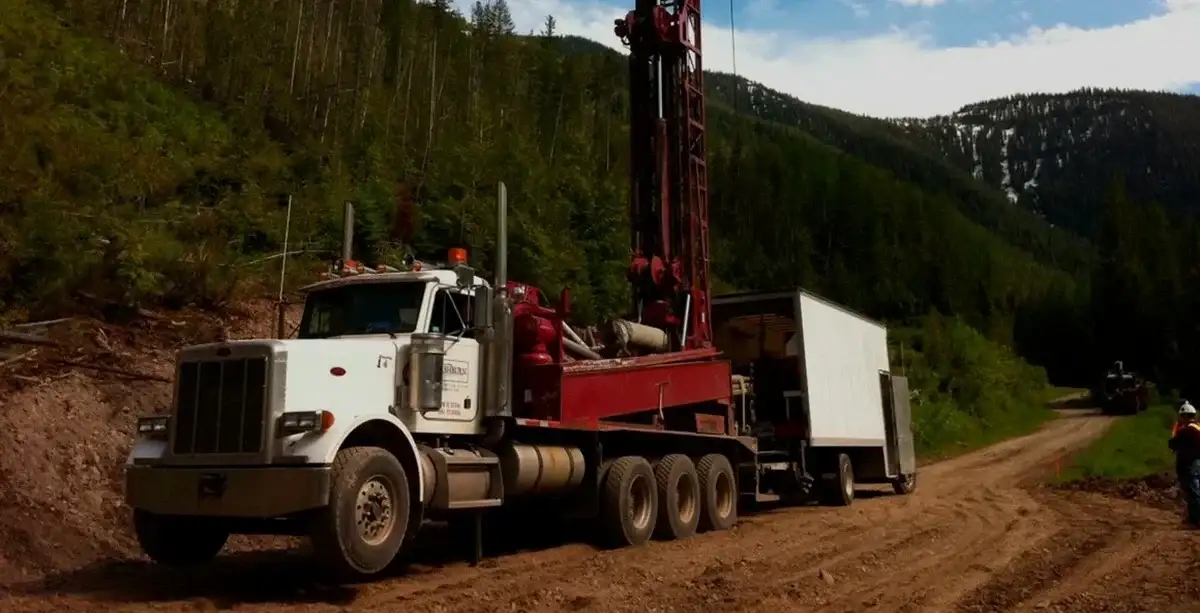
All foundation work in Henderson must comply with the 2018 International Building Code (IBC) as adopted by the City of Henderson, along with the Southern Nevada Amendments. Key local standards include the City of Henderson Public Works Standards for residential and commercial developments, and the Southern Nevada Building Officials (SNBO) uniform amendments. Geotechnical reports must address expansive soil classification per ASTM D4829, provide specific foundation recommendations, and meet the requirements of IBC Chapter 18 for soils and foundations. For post-tensioned slab-on-grade designs common in the region, the PTI DC10.5 standard is routinely referenced. Adherence to these regulations is mandatory for permit approval and ensures foundations are designed for the 0.2g spectral response acceleration typical of the Las Vegas Valley's seismic hazard level.
This category serves a wide range of project types across Henderson's diverse built environment. Residential developments, particularly in master-planned communities like Inspirada and Anthem, require detailed foundation analysis for high-volume production homes where soil variability is a primary concern. Commercial and industrial projects in the West Henderson employment corridor demand deep foundation solutions or ground improvement for heavily loaded structures. Public infrastructure, including schools, fire stations, and utility buildings, relies on robust bearing capacity analysis to meet essential facility performance criteria. Even additions and remodels in older neighborhoods like Pittman require foundation evaluation to ensure compatibility with existing construction and current code requirements. For sites where previous grading has placed engineered or uncontrolled fill, specialized foundations on fill analysis becomes critical to assess settlement potential and require appropriate mitigation.
Questions and answers
What are the most common foundation types used in Henderson, Nevada?
The predominant foundation type for residential construction in Henderson is the post-tensioned slab-on-grade, designed to accommodate expansive and variable soils common in the Las Vegas Valley. For commercial and heavier structures, shallow spread footings bearing on competent native soil or engineered fill are typical. Where near-surface soils are weak or compressible, deep foundations such as drilled piers or driven piles may be required to reach suitable bearing strata.
Why is a geotechnical investigation mandatory before foundation design in Henderson?
A geotechnical investigation is legally required under the City of Henderson's adopted building code (IBC Chapter 18) to characterize subsurface conditions and provide design parameters. Henderson's alluvial soils can exhibit significant variability, expansive potential, and hydro-collapse risk. Without site-specific data, foundations are vulnerable to differential settlement, slab cracking, and structural distress, leading to costly litigation and repairs that proper investigation prevents.
How do expansive soils affect foundations in Henderson?
Expansive soils contain clay minerals that swell when wet and shrink when dry, exerting significant uplift pressures on foundations. In Henderson's arid climate, seasonal moisture fluctuations and landscape irrigation can trigger this movement. Post-tensioned slabs and drilled pier foundations are designed to resist these forces, but only if the geotechnical report accurately quantifies the expansion potential through laboratory testing and provides appropriate moisture control recommendations.
What is the typical process for evaluating foundations on fill in Henderson?
Evaluating foundations on fill involves reviewing historical grading records, performing test pits or borings through the fill, and assessing compaction and material quality. If the fill is documented as engineered and compacted per City of Henderson standards, shallow foundations may be suitable. Uncontrolled fill or debris-laden material often requires mitigation such as overexcavation, deep compaction, or transitioning to a deep foundation system to bypass the problematic layer.