Ground improvement in Henderson, Nevada, encompasses a suite of geotechnical techniques designed to enhance the engineering properties of soil and rock for construction. Located within the Las Vegas Valley, Henderson faces unique subsurface challenges including expansive clays, liquefiable sands, and variable alluvial deposits from the McCullough Range. This category of solutions is critical for mitigating settlement, increasing bearing capacity, and ensuring long-term stability for residential, commercial, and infrastructure projects. Without proper improvement, the region's arid soils—prone to collapse upon wetting—can lead to structural distress, making these methods a cornerstone of safe development.
Henderson's geology is dominated by Quaternary alluvial fans, playa deposits, and occasional caliche layers that create heterogeneous ground conditions. The prevalence of fine-grained soils with high plasticity in areas like Green Valley and Anthem heightens the risk of differential settlement. Additionally, the area's seismic activity, though moderate, necessitates liquefaction mitigation in saturated zones. Techniques such as contaminated soil remediation become essential when urban expansion encroaches on former industrial or mining sites, blending environmental safety with geotechnical integrity. Understanding these local conditions is fundamental to selecting an effective improvement strategy.
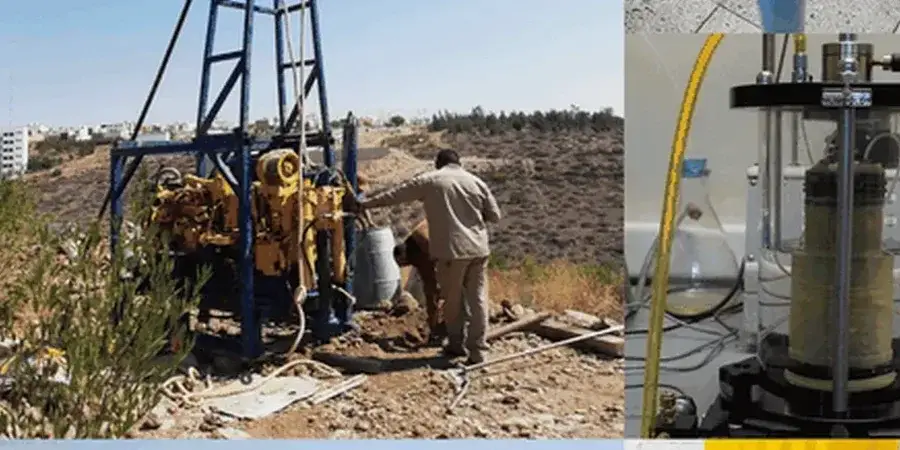
Applicable regulations in Southern Nevada align with the 2018 International Building Code (IBC) as adopted by Clark County, supplemented by the Southern Nevada Amendments. Chapter 18 of the IBC governs soils and foundations, requiring geotechnical investigations per ASTM standards for any improvement design. The Nevada Division of Environmental Protection (NDEP) also oversees remediation projects under NAC 445A, ensuring that methods like jet grouting design meet stringent groundwater protection criteria. Compliance with these codes is mandatory for obtaining permits in Henderson, and engineers must document how ground improvement addresses both structural and environmental risks.
Projects requiring ground improvement in Henderson range from master-planned communities on compressible soils to warehouse developments near the M Resort and heavy civil works like the I-11 corridor. For instance, prefabricated vertical drain (PVD) design accelerates consolidation in clay-rich zones, while preloading with surcharge design pre-compresses soils to minimize post-construction settlement. Even roadway embankments and retention basins benefit from tailored geotextile specification to enhance drainage and separation. Ultimately, ground improvement is not a one-size-fits-all endeavor but a customized response to Henderson's subsurface variability, ensuring that every structure—from a single-family home to a solar array—stands on solid ground for decades.
Questions and answers
What is ground improvement and when is it necessary in Henderson?
Ground improvement refers to techniques that modify soil properties to support construction safely. In Henderson, it becomes necessary when native soils exhibit low bearing capacity, high compressibility, or liquefaction potential—common in the valley's alluvial and clay-rich deposits. Projects ranging from residential slabs to large commercial pads often require it to prevent settlement and meet IBC Chapter 18 standards.
How do local soil conditions in Henderson influence the choice of improvement method?
Henderson's soils include expansive clays, loose sands, and cemented caliche, often layered unpredictably. Expansive clays may require chemical stabilization or moisture control, while loose sands might need densification like vibro-compaction. The presence of a shallow groundwater table in some areas also dictates whether drainage-focused methods, such as prefabricated vertical drains, are appropriate.
What permits or regulations apply to ground improvement projects in Henderson?
Projects must comply with Clark County building codes based on the IBC, requiring a geotechnical report with improvement recommendations. If remediation is involved, NDEP oversight under NAC 445A applies. Environmental assessments may be needed for contaminated sites. Always consult with a Nevada-licensed geotechnical engineer to navigate these requirements before starting construction.
Can ground improvement reduce long-term maintenance costs for structures in Henderson?
Yes, proper ground improvement directly cuts long-term costs by preventing foundation cracks, slab heaving, and utility damage caused by soil movement. For expansive or collapsible soils common in the area, upfront investment in techniques like surcharge preloading or jet grouting minimizes the need for future repairs, protecting property value and structural integrity over decades.